
.webp)



A Beginner's Guide to Performing Fajr Prayer: A Step-by-Step Approach
Fajr is the first of five daily prayers in Islam. It's performed at dawn, before sunrise.The prayer consists of two obligatory rak'ahs (units) of prayer. Many perform two optional rak'ahs before.Fajr prayer time starts at true dawn, when the first light appears in the sky.The time for Fajr ends just before sunrise. Praying after sunrise is not valid.It's recommended to pray as early as possible within the prescribed time.
Fajr marks the beginning of the day. It's a time for spiritual reflection and seeking Allah's guidance.
Performing the Fajr prayer involves several steps, from preparation to the actual prayer itself. Here’s a step-by-step guide
Preparation:

Wudu (Ablution):* Perform wudu to ensure you are in a state of physical and spiritual cleanliness. This involves washing your hands, mouth, nose, face, arms, head, and feet with water.
Wear clean and modest clothing that covers the ‘awrah (the parts of the body that should be covered in front of others).
Choose a clean and quiet place for prayer, preferably facing the qibla (the direction of the Kaaba in Mecca).
Performing the Fajr Prayer:
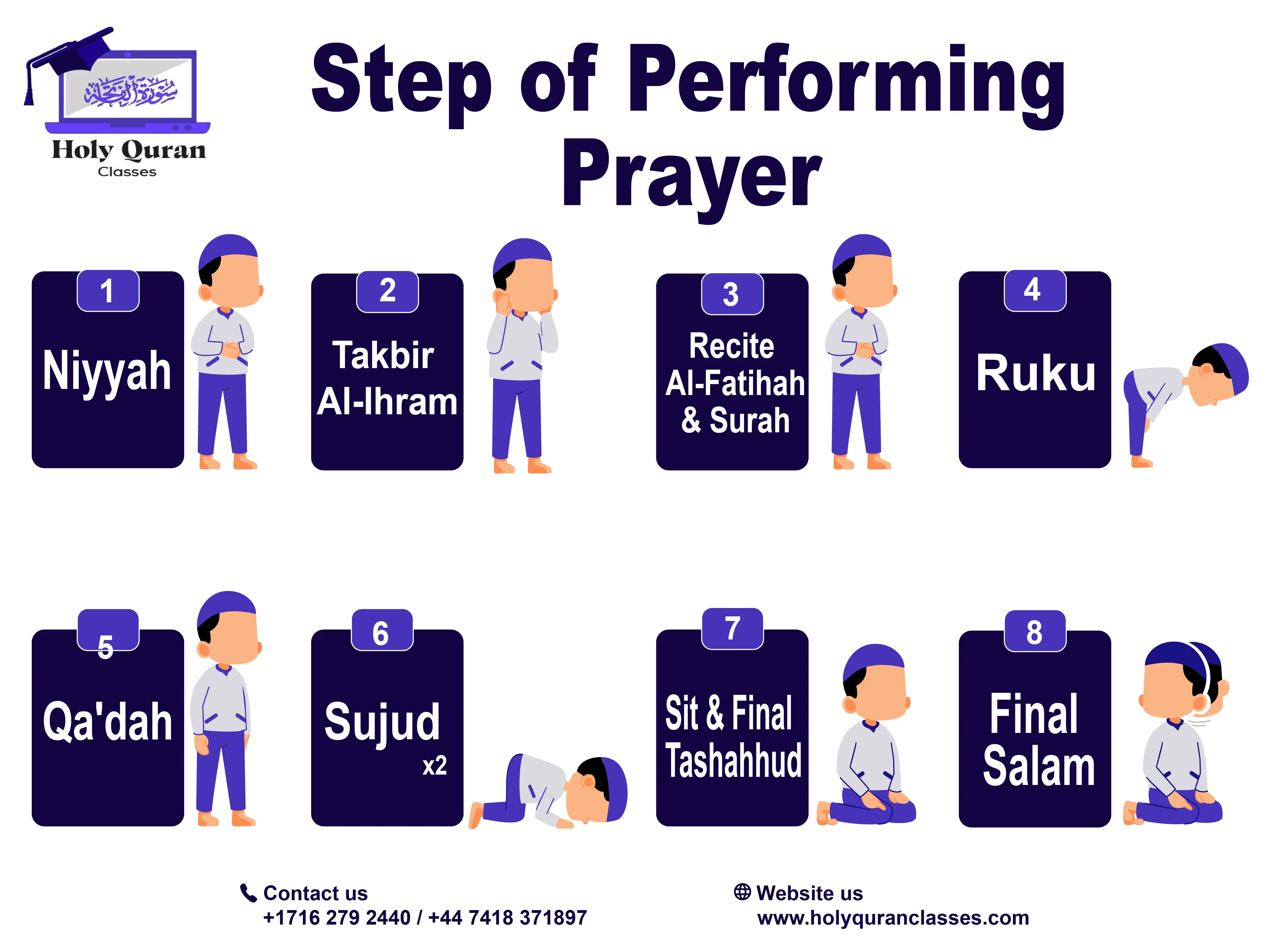 Intention (Niyyah:
Before starting the prayer, make a silent intention in your heart that you are performing the Fajr prayer for the sake of Allah.
Takbir al-Ihram:
Stand facing the qibla, raise your hands to shoulder or ear level, and say “Allahu Akbar” (Allah is the Greatest).
Recite Al-Fatihah/Recite a Surah:
After the Takbir, place your hands on your chest or below your chest, and recite Surah Al-Fatihah (The Opening).After reciting Al-Fatihah, recite another Surah from the Quran. For Fajr prayer, it is common to recite Surah Al-Ikhlas, Surah Al-Falaq, or Surah An-Nas, though you can choose any Surah.
Ruku (Bowing):
Bow down, keeping your back and head level, and say “Subhana Rabbiyal Azim” (Glory is to my Lord, the Most Great). Ensure your knees are straight and your hands are on your knees.
Qa'dah (Standing Again):
Rise from the bowing position and stand straight. Say “Sami' Allahu liman Hamidah” (Allah hears the one who praises Him) and then “Rabbana lakal hamd” (Our Lord, to You is due all praise).
Sujud (Prostration):
Go to the ground in prostration, with your forehead, nose, palms, knees, and toes touching the floor. Say “Subhana Rabbiyal A’la” (Glory is to my Lord, the Most High).
Sit/Final Tashahhud:
Sit on your legs and say “Rabbighfir li” (My Lord, forgive me) and then perform a second prostration.After the second sujud, sit and recite the Tashahhud: “At-tahiyyatu lillahi wa-salawatu wa-tayibatu. As-salamu ‘alayka ayyuhan-nabiyyu wa rahmatullahi wa barakatuhu. As-salamu ‘alayna wa ‘ala ibadillahi as-salihin. Ashhadu an la ilaha illa Allah wahdahu la sharika lahu. Ashhadu anna Muhammadur Rasulu Allah.”
Final Salam:
To conclude the prayer, turn your head to the right and then to the left, saying “As-salamu ‘alaykum wa rahmatullah” (Peace and mercy of Allah be upon you).
After the Prayer:
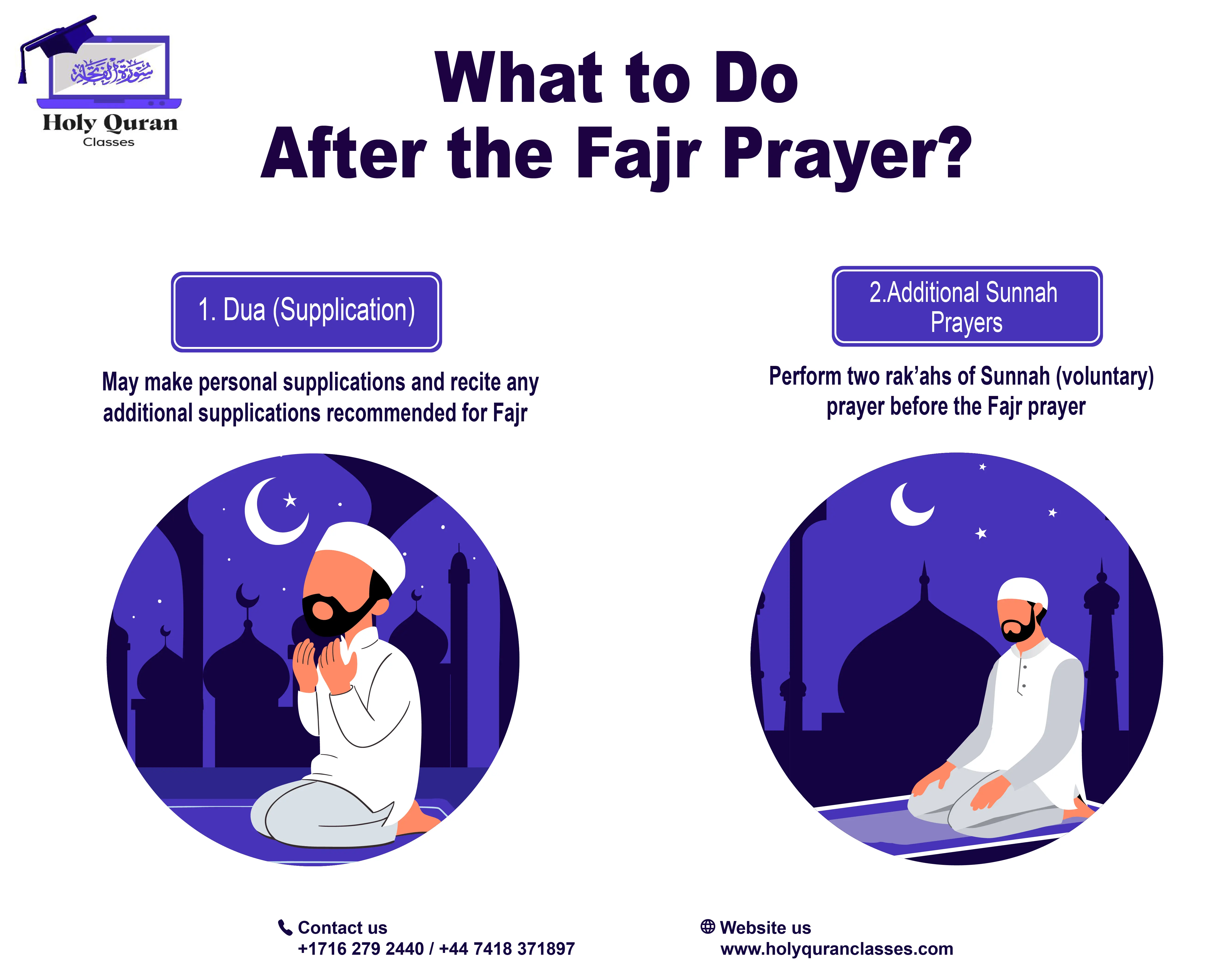 Dua (Supplication):
After finishing the prayer, you may make personal supplications and recite any additional supplications recommended for Fajr.
Additional Sunnah Prayers:
It is recommended to perform two rak’ahs of Sunnah (voluntary) prayer before the Fajr prayer, though this is not obligatory.
Frequently Asked Questions!
Fajr prayer is the first of the five daily prayers in Islam, performed before dawn. It consists of two rak'ahs (units of prayer) and marks the beginning of the day for Muslims, providing an opportunity for spiritual reflection and connection with Allah.
Fajr prayer is performed during the time between the beginning of dawn and just before sunrise. The exact timing varies depending on your geographic location and the time of year. Many prayer timing apps and websites can help you determine the precise time for Fajr in your area.
To perform Fajr prayer, follow these steps:
Intention (Niyyah): Make a sincere intention to perform the Fajr prayer.
Ruqoo (Standing): Begin by standing and reciting Surah Al-Fatihah followed by another Surah from the Quran.
Ruku (Bowing): Bow with your hands on your knees and back straight, saying "Subhana Rabbiyal Azim."
Sujood (Prostration): Prostrate twice, saying "Subhana Rabbiyal A'la" each time.
Tashahhud: Sit and recite the Tashahhud after the prostrations.
Tasleem: End the prayer by turning your head to the right and then to the left, saying "As-salamu alaykum wa rahmatullah."
If you miss Fajr prayer, it is important to make it up as soon as possible. You can perform the missed prayer (Qada) any time before the next prayer time. Regularly missing prayers should be addressed with a commitment to improve your prayer routine.
Expand Your Knowledge:
Recommended Courses to Explore!
Want to continue your learning journey? Check out our other popular courses and take your knowledge to the next level!
Before starting the prayer, make a silent intention in your heart that you are performing the Fajr prayer for the sake of Allah.
Stand facing the qibla, raise your hands to shoulder or ear level, and say “Allahu Akbar” (Allah is the Greatest).
After the Takbir, place your hands on your chest or below your chest, and recite Surah Al-Fatihah (The Opening).After reciting Al-Fatihah, recite another Surah from the Quran. For Fajr prayer, it is common to recite Surah Al-Ikhlas, Surah Al-Falaq, or Surah An-Nas, though you can choose any Surah.
Bow down, keeping your back and head level, and say “Subhana Rabbiyal Azim” (Glory is to my Lord, the Most Great). Ensure your knees are straight and your hands are on your knees.
Rise from the bowing position and stand straight. Say “Sami' Allahu liman Hamidah” (Allah hears the one who praises Him) and then “Rabbana lakal hamd” (Our Lord, to You is due all praise).
Go to the ground in prostration, with your forehead, nose, palms, knees, and toes touching the floor. Say “Subhana Rabbiyal A’la” (Glory is to my Lord, the Most High).
Sit on your legs and say “Rabbighfir li” (My Lord, forgive me) and then perform a second prostration.After the second sujud, sit and recite the Tashahhud: “At-tahiyyatu lillahi wa-salawatu wa-tayibatu. As-salamu ‘alayka ayyuhan-nabiyyu wa rahmatullahi wa barakatuhu. As-salamu ‘alayna wa ‘ala ibadillahi as-salihin. Ashhadu an la ilaha illa Allah wahdahu la sharika lahu. Ashhadu anna Muhammadur Rasulu Allah.”
To conclude the prayer, turn your head to the right and then to the left, saying “As-salamu ‘alaykum wa rahmatullah” (Peace and mercy of Allah be upon you).
After the Prayer:
After finishing the prayer, you may make personal supplications and recite any additional supplications recommended for Fajr.
It is recommended to perform two rak’ahs of Sunnah (voluntary) prayer before the Fajr prayer, though this is not obligatory.
Fajr prayer is the first of the five daily prayers in Islam, performed before dawn. It consists of two rak'ahs (units of prayer) and marks the beginning of the day for Muslims, providing an opportunity for spiritual reflection and connection with Allah.
Fajr prayer is performed during the time between the beginning of dawn and just before sunrise. The exact timing varies depending on your geographic location and the time of year. Many prayer timing apps and websites can help you determine the precise time for Fajr in your area.
To perform Fajr prayer, follow these steps: Intention (Niyyah): Make a sincere intention to perform the Fajr prayer. Ruqoo (Standing): Begin by standing and reciting Surah Al-Fatihah followed by another Surah from the Quran. Ruku (Bowing): Bow with your hands on your knees and back straight, saying "Subhana Rabbiyal Azim." Sujood (Prostration): Prostrate twice, saying "Subhana Rabbiyal A'la" each time. Tashahhud: Sit and recite the Tashahhud after the prostrations. Tasleem: End the prayer by turning your head to the right and then to the left, saying "As-salamu alaykum wa rahmatullah."
If you miss Fajr prayer, it is important to make it up as soon as possible. You can perform the missed prayer (Qada) any time before the next prayer time. Regularly missing prayers should be addressed with a commitment to improve your prayer routine.
Want to continue your learning journey? Check out our other popular courses and take your knowledge to the next level!






Join The World's Largest Quran Learning Online Program Today!
Still hesitant about quran classes online? Or do you need help to accomplish it? So, why not take advantage of our free trial sessions and discover them yourself? As we provide this service with top rated teachers, we are sure that you will like how our teachers teach and how simple and hassle-free quran online class is.


By subscribing to the newsletter, you will be updated with our latest blogs, promotion packages, or any other updates regarding HolyQuranClasses through emails.