
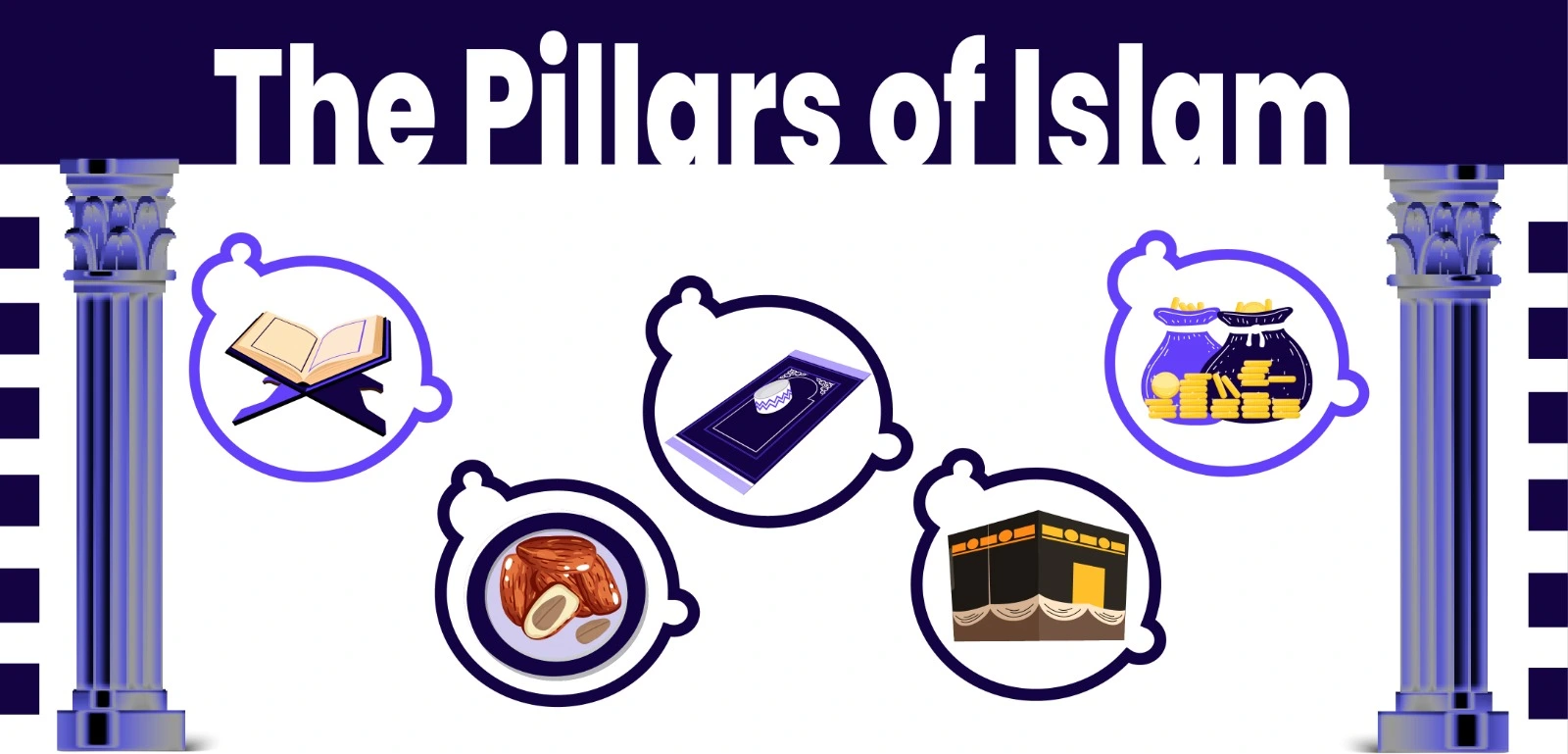



The 5 Pillars of Islam: Foundations of Faith for Every Muslim
Islam is built on five core practices known as the 5 Pillars. These are the essential duties every Muslim follows to live a life that pleases Allah (God). Whether you're new to Islam or someone who has been practicing for years, understanding these pillars helps deepen your connection to the faith.
The 5 Pillars of Islam in the Qur'an and Hadith
Shahadah – The Declaration of Faith:
The Shahadah, or the declaration of faith, is the first and most important pillar. It consists of the words: “There is no god but Allah, and Muhammad is His messenger.” This statement affirms a Muslim’s belief in the oneness of Allah and the finality of Prophet Muhammad’s (PBUH) prophethood.
Key Qur'anic Example:
“Allah witnesses that there is no deity except Him, and so do the angels and those of knowledge – [that He is] maintaining [creation] in justice. There is no deity except Him, the Exalted in Might, the Wise.” (Surah Al-Imran, 3:18)
Hadith Reference:
“Allah witnesses that there is no deity except Him, and so do the angels and those of knowledge – [that He is] maintaining [creation] in justice. There is no deity except Him, the Exalted in Might, the Wise.” (Surah Al-Imran, 3:18)
Salah – The Prayer:
Salah, the second pillar, requires Muslims to pray five times a day at prescribed times: dawn, noon, mid-afternoon, sunset, and night. Each prayer includes specific movements and verses from the Quran, allowing Muslims to maintain a close relationship with Allah.
Key Qur'anic Example:
“Indeed, prayer has been decreed upon the believers a decree of specified times.” (Surah An-Nisa, 4:103)
— Surah Al-Fatiha (1:6)
Hadith Reference:
The Prophet Muhammad (PBUH) said: “The first matter that the slave will be brought to account for on the Day of Judgment is the prayer. If it is sound, then the rest of his deeds will be sound. And if it is corrupt, then the rest of his deeds will be corrupt.” (At-Tirmidhi)(Sahih Al-Bukhari)
Zakat – Giving to Charity:
Zakat, the third pillar, is an act of giving to those in need. Muslims are required to donate 2.5% of their savings annually to purify their wealth and help the less fortunate. Zakat ensures that wealth is circulated and shared in a just and compassionate way.
Key Qur'anic Example:
“Take, [O Muhammad], from their wealth a charity by which you purify them and cause them increase, and invoke [Allah’s blessings] upon them. Indeed, your invocations are reassurance for them. And Allah is Hearing and Knowing.” (Surah At-Tawbah, 9:103)
Hadith Reference:
The Prophet Muhammad (PBUH) said: “Charity extinguishes sin, just as water extinguishes fire.” (Ibn Majah)
Sawm – Fasting During Ramadan:
The fourth pillar, Sawm, is the act of fasting during the month of Ramadan. Muslims fast from dawn until sunset, refraining from food, drink, and other physical needs. This spiritual practice encourages self-discipline, empathy for the poor, and closeness to Allah.
Key Qur'anic Example:
“O you who have believed, decreed upon you is fasting as it was decreed upon those before you that you may become righteous.” (Surah Al-Baqarah, 2:183)
Hadith Reference:
The Prophet Muhammad (PBUH) said: “Whoever fasts during Ramadan out of faith and seeking reward, his previous sins will be forgiven.” (Sahih Bukhari)
Hajj – The Pilgrimage to Mecca:
Hajj, the fifth pillar, is the pilgrimage to the holy city of Mecca. Every Muslim who is physically and financially able must perform Hajj at least once in their lifetime. Hajj is a profound spiritual journey where Muslims unite in worship, retracing the footsteps of the Prophet Ibrahim (Abraham).
Key Qur'anic Example:
“And [due] to Allah from the people is a pilgrimage to the House – for whoever is able to find thereto a way.” (Surah Al-Imran, 3:97)
Hadith Reference:
The Prophet Muhammad (PBUH) said: “Whoever performs Hajj and does not commit any obscenity or wrongdoing, he will come out as the day he was born – pure and free of sins.” (Sahih Bukhari)
Shahadah – The Declaration of Faith:
The Shahadah, or the declaration of faith, is the first and most important pillar. It consists of the words: “There is no god but Allah, and Muhammad is His messenger.” This statement affirms a Muslim’s belief in the oneness of Allah and the finality of Prophet Muhammad’s (PBUH) prophethood.
“Allah witnesses that there is no deity except Him, and so do the angels and those of knowledge – [that He is] maintaining [creation] in justice. There is no deity except Him, the Exalted in Might, the Wise.” (Surah Al-Imran, 3:18)
“Allah witnesses that there is no deity except Him, and so do the angels and those of knowledge – [that He is] maintaining [creation] in justice. There is no deity except Him, the Exalted in Might, the Wise.” (Surah Al-Imran, 3:18)
Salah – The Prayer:
Salah, the second pillar, requires Muslims to pray five times a day at prescribed times: dawn, noon, mid-afternoon, sunset, and night. Each prayer includes specific movements and verses from the Quran, allowing Muslims to maintain a close relationship with Allah.
“Indeed, prayer has been decreed upon the believers a decree of specified times.” (Surah An-Nisa, 4:103) — Surah Al-Fatiha (1:6)
The Prophet Muhammad (PBUH) said: “The first matter that the slave will be brought to account for on the Day of Judgment is the prayer. If it is sound, then the rest of his deeds will be sound. And if it is corrupt, then the rest of his deeds will be corrupt.” (At-Tirmidhi)(Sahih Al-Bukhari)
Zakat – Giving to Charity:
Zakat, the third pillar, is an act of giving to those in need. Muslims are required to donate 2.5% of their savings annually to purify their wealth and help the less fortunate. Zakat ensures that wealth is circulated and shared in a just and compassionate way.
“Take, [O Muhammad], from their wealth a charity by which you purify them and cause them increase, and invoke [Allah’s blessings] upon them. Indeed, your invocations are reassurance for them. And Allah is Hearing and Knowing.” (Surah At-Tawbah, 9:103)
The Prophet Muhammad (PBUH) said: “Charity extinguishes sin, just as water extinguishes fire.” (Ibn Majah)
Sawm – Fasting During Ramadan:
The fourth pillar, Sawm, is the act of fasting during the month of Ramadan. Muslims fast from dawn until sunset, refraining from food, drink, and other physical needs. This spiritual practice encourages self-discipline, empathy for the poor, and closeness to Allah.
“O you who have believed, decreed upon you is fasting as it was decreed upon those before you that you may become righteous.” (Surah Al-Baqarah, 2:183)
The Prophet Muhammad (PBUH) said: “Whoever fasts during Ramadan out of faith and seeking reward, his previous sins will be forgiven.” (Sahih Bukhari)
Hajj – The Pilgrimage to Mecca:
Hajj, the fifth pillar, is the pilgrimage to the holy city of Mecca. Every Muslim who is physically and financially able must perform Hajj at least once in their lifetime. Hajj is a profound spiritual journey where Muslims unite in worship, retracing the footsteps of the Prophet Ibrahim (Abraham).
“And [due] to Allah from the people is a pilgrimage to the House – for whoever is able to find thereto a way.” (Surah Al-Imran, 3:97)
The Prophet Muhammad (PBUH) said: “Whoever performs Hajj and does not commit any obscenity or wrongdoing, he will come out as the day he was born – pure and free of sins.” (Sahih Bukhari)
Conclusion:
The 5 Pillars of Islam are not just religious duties; they are a way of life. From the declaration of faith to giving to those in need, these pillars guide Muslims toward a fulfilling, spiritual journey. Each pillar has its own significance and contributes to building a strong connection with Allah and the Muslim community.
To deepen your understanding of these core practices and enhance your Quran recitation, explore the online courses at Holy Quran Classes,, including our Quran Recitation Course. Whether you’re new to Islam or looking to strengthen your faith, our classes are designed to support your spiritual growth.
By following these pillars, Muslims around the world grow closer to Allah and strengthen their faith every day.
The 5 Pillars of Islam are not just religious duties; they are a way of life. From the declaration of faith to giving to those in need, these pillars guide Muslims toward a fulfilling, spiritual journey. Each pillar has its own significance and contributes to building a strong connection with Allah and the Muslim community.
To deepen your understanding of these core practices and enhance your Quran recitation, explore the online courses at Holy Quran Classes,, including our Quran Recitation Course. Whether you’re new to Islam or looking to strengthen your faith, our classes are designed to support your spiritual growth.
By following these pillars, Muslims around the world grow closer to Allah and strengthen their faith every day.
Online Quran learning solutions that meet your needs. World's Top Rated Online Quran Classes for Kids and Adults with Native Arab Quran Tutors.




The 5 Pillars of Islam are the core beliefs and practices that every Muslim must follow. They are:
- Shahadah: Declaration of faith
- Salah: The five daily prayers
- Zakat: Giving charity
- Sawm: Fasting during Ramadan
- Hajj: Pilgrimage to Mecca
The 5 Pillars are the foundation of a Muslim's faith and practice. They guide Muslims in their relationship with Allah, their daily life, and their interaction with others. These pillars ensure that a Muslim's spiritual, social, and moral duties are fulfilled.
Muslims are required to pray five times a day: at dawn (Fajr), noon (Dhuhr), mid-afternoon (Asr), sunset (Maghrib), and night (Isha). This practice, known as Salah, helps Muslims stay connected to Allah throughout the day.
Yes, reciting the Shahadah (declaration of faith) sincerely and with belief is how one becomes a Muslim. The statement is: “There is no god but Allah, and Muhammad is His messenger.” This declaration affirms a person’s belief in the oneness of Allah and the prophethood of Muhammad (PBUH).
Want to continue your learning journey? Check out our other popular courses and take your knowledge to the next level!
Join The World's Largest Quran Learning Online Program Today!
Still hesitant about quran classes online? Or do you need help to accomplish it? So, why not take advantage of our free trial sessions and discover them yourself? As we provide this service with top rated teachers, we are sure that you will like how our teachers teach and how simple and hassle-free quran online class is.


By subscribing to the newsletter, you will be updated with our latest blogs, promotion packages, or any other updates regarding HolyQuranClasses through emails.